
How Much Does Chimney Flashing Replacement Cost in Newark, NJ?
In Newark, our chimney inspection starts at $39 and chimney cleaning at $89; we do not list a starting price for flashing replacement. A flashing-focused inspection can identify where water is entering and what repair the chimney needs.
Our Starting Prices in Newark
| Service | Price |
|---|---|
| Chimney Sweep | From $89 |
| Chimney Inspection | From $39 |
| Chimney Cleaning | From $89 |
| Chimney Cap Installation | From $250 |
| Chimney Liner Installation | From $899 |
| Gas Fireplace Service | From $49 |
Need help now? (973) 559-5504
Chimney Flashing Replacement Cost Starts With the Right Diagnosis
The price of a flashing replacement depends on the work needed at the joint where the chimney meets the roof. The metal flashing may be damaged, or water may be getting in through nearby masonry or another roof detail. Replacing flashing without finding the entry point can leave the leak unresolved.
Our listed starting prices are for other specific services: chimney inspection from $39 and chimney cleaning from $89. Neither price includes flashing replacement. For an overview of the services with listed prices, see our prices.
A Flashing Assessment Checks the Roof-Chimney Joint
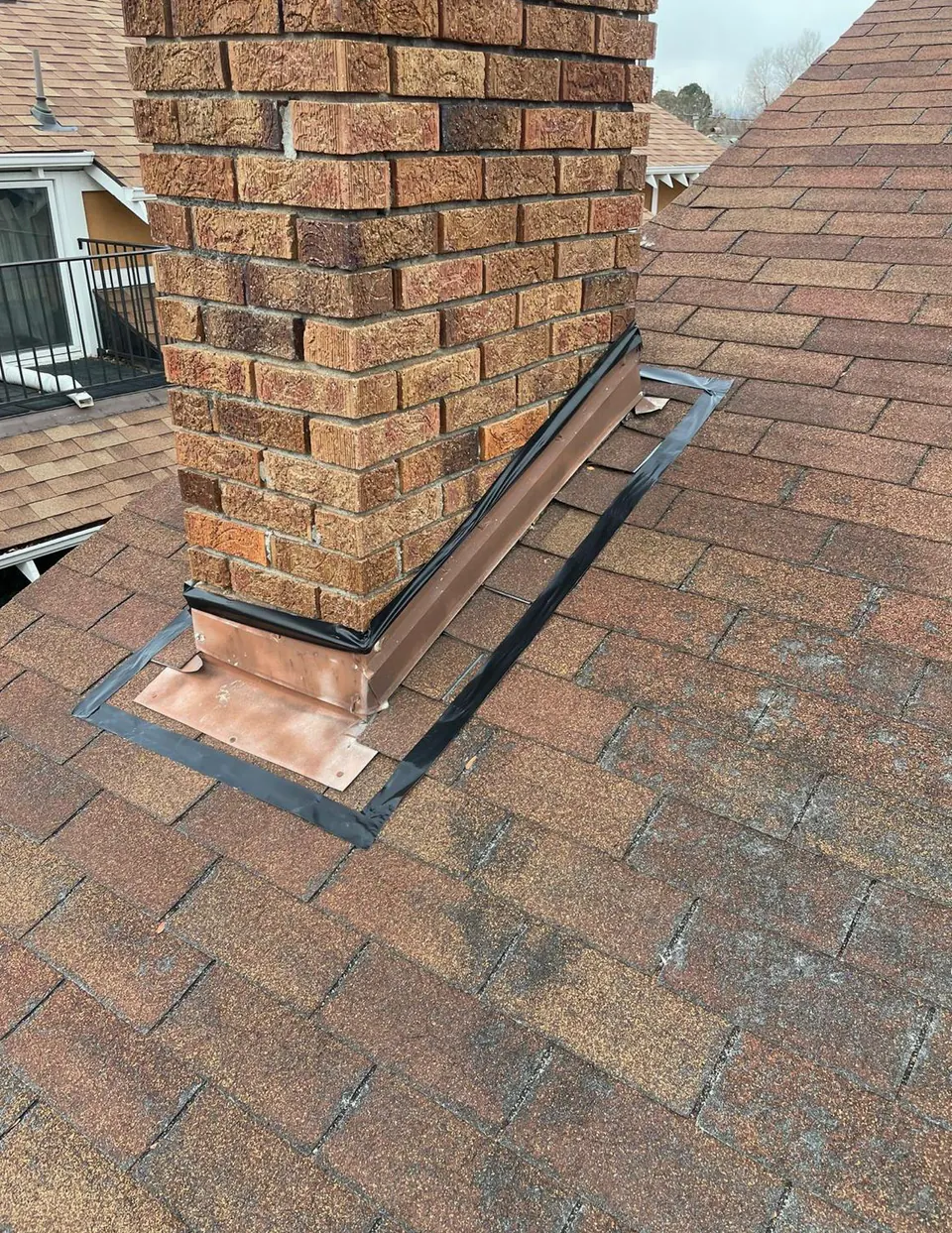
Flashing is the material that seals the junction between a chimney and the roof. A flashing-focused assessment looks for gaps, lifted or bent metal, failed sealant, and signs that water has moved into nearby masonry or interior surfaces. The visible stain may appear away from the actual entry point, so matching indoor signs with the roof-side condition matters.
The visit is the diagnostic stage: the inspection identifies the likely source and the repair scope. Replacement work then involves removing affected material and fitting flashing to the chimney and roof; the time required depends on access and the extent of the work. We explain the work clearly and recommend only services the homeowner needs.
These Chimney Flashing Conditions Affect the Replacement Scope
- Damage to the metal — Bent, separated, corroded, or missing flashing may require more than resealing a small opening. The amount and placement of damaged material affect the repair.
- Nearby masonry condition — Cracked mortar or loose masonry at the chimney can affect how flashing meets the chimney surface. A flashing repair alone may not address water entering through damaged masonry.
- Roof access and layout — Roof pitch, the chimney’s position, and the shape of the roof affect how a professional reaches and works on the joint. Do not climb onto the roof to inspect it yourself.
- How far water has traveled — A ceiling stain or damp wall can indicate that water has moved beyond the roof opening. The visible mark is useful evidence, but it does not by itself identify the needed repair.
- Related damage — If water has affected the chimney structure or other roof details, the work may involve more than flashing. Ask for the proposed repair to identify each affected area.
Need help now? (973) 559-5504
Choose a Flashing Repair That Matches the Damage
Repair a limited defect
A localized repair may fit when the damage is confined to a small area and the surrounding flashing and masonry remain sound. The inspection should identify what is being repaired and why.
Replace damaged flashing
Replacement is the relevant option when the flashing is broadly damaged, separated, or no longer provides a sound roof-chimney junction. The scope should specify which sections will be removed and replaced.
Address another water-entry point
When the flashing is intact but the chimney crown or masonry is damaged, repairing the actual source may matter more than replacing flashing. A chimney flashing repair service can assess the joint and identify the needed work.
Follow These Steps Before Chimney Flashing Work Begins
- Record where water appears — Note the room, ceiling or wall location, and when you first noticed the stain or drip. Check whether it changes after rain, but do not enter a wet attic or touch electrical fixtures near water.
- Photograph signs from a safe place — Take pictures of interior staining and any exterior areas visible from the ground. Check that the photos show the location clearly; do not climb a ladder or walk on the roof.
- Look for changes over time — Compare new marks with older photos, and note peeling paint, dampness, or a growing stain. A change after rainfall helps describe the problem but does not prove which roof component is leaking.
- Share the chimney and roof details — Tell the sweep whether the chimney is masonry or has a metal chase, and describe any recent roof work or visible damage. Check that your notes separate what you observed from what you suspect.
- Have the joint examined — A professional can inspect the flashing, nearby chimney masonry, and visible roof details. Ask which condition points to the leak and whether another area needs attention.
- Review the proposed work — Before work starts, check that the scope names the affected flashing and any related repairs. Make sure it distinguishes replacement from sealing or masonry work.
- Check the repair area afterward — Ask what was removed, what was installed or repaired, and whether nearby masonry was part of the work. Keep the explanation and any photographs with your home maintenance records.
These Leak Clues Call for a Chimney Flashing Check
- Water stains near the chimney — A new or spreading stain near the chimney after rain is a reason to arrange an inspection. Do not assume the leak starts directly above the stain.
- Visible gaps or lifted metal — From the ground, you may be able to see flashing that looks separated or bent. A ground-level view cannot confirm the full condition of the roof joint.
- Cracked mortar beside the flashing — Open or deteriorated mortar where flashing meets masonry can leave a vulnerable area. Ask for both the metal and the surrounding masonry to be checked.
- Leak symptoms after a weather event — After severe weather, a new leak or visible damage deserves a professional check. CSIA’s Level 2 masonry chimney procedure identifies a weather event as a reason to consider a Level 2 inspection.
Need help now? (973) 559-5504
Three Chimney Leak Situations and Their Starting Prices
A ceiling stain appears after rain, but you cannot see the roof joint clearly: a chimney inspection starts at $39. The inspection can help identify whether flashing, masonry, or another visible area needs attention; that starting price is not a flashing replacement price.
You can see damaged flashing from the ground, or a professional finds a failed section: chimney flashing repair is the relevant service, but we do not list a starting replacement price. The scope needs to identify the damaged area and the work required.
You also need the flue cleaned: chimney cleaning starts at $89, but cleaning addresses a different issue from a roof leak. Do not treat a cleaning price as the cost of flashing work.
Book a Chimney Flashing Inspection Before the Leak Spreads
A recurring leak, visible gap, or fresh water stain is the point to have a chimney sweep check the roof-chimney joint. Avoid applying roof cement or sealant as a substitute for diagnosis; it can cover the visible opening without addressing damage elsewhere in the joint.
Book by calling (973) 559-5504 or using our contact page. Share where water appears, when you noticed it, and any safe-to-take photos; that information helps focus the inspection. For repair details, see our chimney flashing repair service.
Frequently asked questions
Can a chimney flashing leak be repaired without replacing all the flashing?
Yes, a localized repair may fit when the damage is limited and the surrounding material is sound. An inspection needs to identify whether the opening is isolated or part of wider damage.
What should I do if water is coming in around my chimney?
Keep away from wet electrical fixtures and do not climb onto the roof. Note where the water appears, take photos from a safe location, and arrange a chimney inspection to identify the entry point.
Can I seal chimney flashing myself?
Do not climb onto a roof or rely on surface sealant to diagnose a leak. A professional can check whether the problem is flashing, nearby masonry, or another roof detail before repair work begins.
How long does chimney flashing replacement take?
The time depends on roof access, how much flashing needs work, and whether nearby masonry also needs repair. An inspection determines the scope before a useful work-time estimate can be given.
Get the Chimney Leak Checked
Call (973) 559-5504 or contact us to arrange a chimney flashing inspection.